Night Owl Nation: The Secret Productivity Lives of People Who Come Alive After Midnight
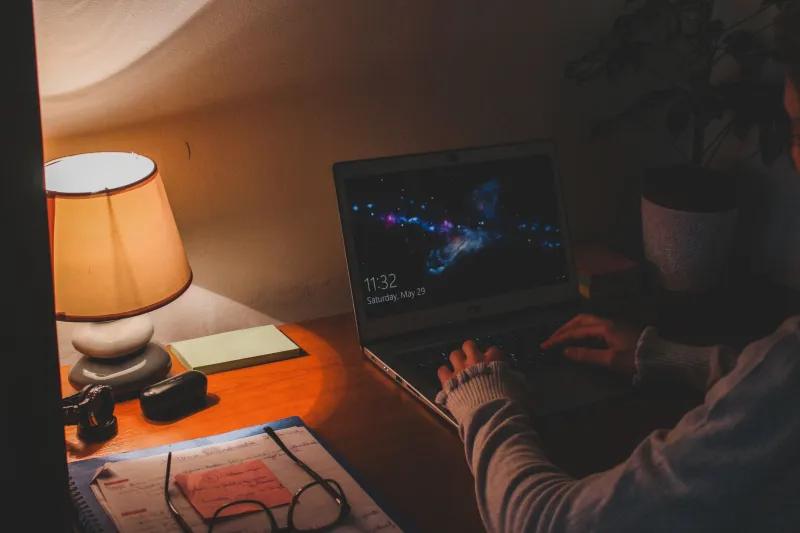
Somewhere around 11 PM on a Tuesday, while most of America is brushing its teeth and setting a 6 AM alarm, a graphic designer in Austin is pulling up a blank canvas and feeling genuinely excited about it for the first time all day. A novelist in Chicago is three pages deep into a chapter that just started flowing. A software engineer in Portland is debugging code with a clarity she absolutely did not have at 2 PM during that team standup.
These people are not broken. They're not lazy. They're not "failing at adulting." They're night owls — and the science behind why they do their best work after dark is a lot more interesting than the early-bird crowd would have you believe.
Your Body Clock Isn't a Moral Compass
Here's something researchers in chronobiology — the study of biological timing — have been saying for years that somehow hasn't made it into mainstream productivity culture: your sleep-wake preference is largely genetic. It's called your chronotype, and it's about as negotiable as your height.
Studies from institutions like the University of Munich, which runs the ongoing Social Jetlag project, have consistently found that roughly 25 to 30 percent of the population skews toward an evening chronotype. These people's circadian rhythms naturally push alertness, creativity, and peak cognitive function into the later hours. Their melatonin releases later. Their cortisol peaks later. Their brains, quite literally, warm up on a different schedule.
And yet, American work culture — with its 9-to-5 default, its "the early bird gets the worm" bumper sticker wisdom, its breakfast meetings and morning hustle content — treats this as a personal failing rather than a biological reality. Night owls are told to just go to bed earlier. To try melatonin. To stop scrolling. As if the entire architecture of their nervous system is just a bad habit they haven't kicked yet.
What Actually Happens to the Night Owl Brain After Dark
So what's going on neurologically when a night owl finally hits their window? A few things worth knowing.
First, there's the obvious one: fewer interruptions. Late at night, the group chat goes quiet. Nobody's sending Slack messages. The news cycle slows. The mental load of being a socially available human being drops significantly, and that freed-up cognitive bandwidth goes somewhere — usually straight into whatever creative or analytical task is in front of you.
But it's not just about silence. Research published in journals like Thinking & Reasoning has found that people tend to think more creatively when they're slightly outside their peak alertness window — when the brain's inhibitory controls are a little more relaxed. For night owls, that loosening-up effect kicks in earlier in the evening. The rigid, self-editing part of the brain eases off, and more associative, lateral thinking takes over. That's the mental state where ideas connect in unexpected ways. Where the obvious solution gives way to the interesting one.
There's also something to be said about psychological ownership of the hours. Night owls consistently describe the late-night stretch as theirs in a way the daytime rarely feels. No obligations are pulling at them. No one needs anything. That psychological safety — the sense that this time belongs entirely to you — is itself a creative accelerant.
Society's Alarm Clock Problem
Here's the frustrating part: even when night owls are thriving on their natural schedule, the world keeps penalizing them for it. Early morning meetings. School start times that force teenagers (who are biologically wired to be night owls, by the way — adolescence shifts chronotype toward evenings) to show up and perform at 7:30 AM. Bosses who equate visibility at 8 AM with dedication.
This mismatch between biological timing and social scheduling even has a name: social jetlag. And its effects aren't trivial. Chronic sleep deprivation from forcing an evening chronotype into a morning schedule has been linked to increased risk of metabolic issues, mood disorders, and reduced cognitive performance. It's not that night owls are bad at mornings. It's that they're being asked to run a race starting at a time their body hasn't fully shown up yet.
The pandemic, for all its chaos, accidentally gave a lot of night owls a glimpse of what life could look like with schedule flexibility. Remote work let people shift their hours. Productivity in some cases actually went up. Turns out, when you let people work when their brain is actually online, things get done. Who knew.
Making the Night Owl Life Work Without Burning Out
If you're a confirmed evening person navigating a world that wasn't built for you, a few things can genuinely help — without requiring you to rewire your entire biology.
Protect your late-night window deliberately. Don't let it become passive screen time by default. Identify the two or three things that benefit most from your peak creative state — writing, designing, problem-solving, planning — and save those specifically for after 9 or 10 PM. Use the daytime for tasks that don't require your best thinking: emails, admin, routine calls.
Communicate your rhythm when you can. If you have any flexibility in your work setup, advocate for it. Async communication tools exist for a reason. A thoughtful email sent at midnight is worth more than a distracted one sent at 8 AM under obligation.
Watch the weekend rebound. One of the biggest traps for night owls is dramatically shifting their schedule on weekends — staying up until 2 AM because they can, then sleeping until noon — only to suffer brutal social jetlag come Monday. Keeping the swing within an hour or two makes the week far more manageable.
Don't romanticize exhaustion. There's a difference between a productive late night and just being awake and depleted. Night owls can absolutely burn out, and they often do it quietly, because they've normalized functioning on less sleep than they actually need. Total sleep time still matters — you're just shifting when it happens.
The Bigger Picture
What the chronotype conversation is really asking us to do is question a pretty deep cultural assumption: that morning virtue equals real virtue. That discipline looks like a 5 AM alarm. That if you haven't been productive before breakfast, you've already failed the day.
That's not science. That's a story we inherited, and it fits roughly half the population at best.
The Tuesday night crew — the ones deep in a creative flow while the rest of the country sleeps — isn't behind. They're not undisciplined. They're just running on a different clock. And honestly? Some of the most interesting work of the week is probably happening right now, somewhere after midnight, in a quiet apartment with a cold cup of coffee and a screen full of ideas finally coming together.
Same week. Different shift.