The Unglamorous Weekend Is Having a Moment — And It Makes Total Sense
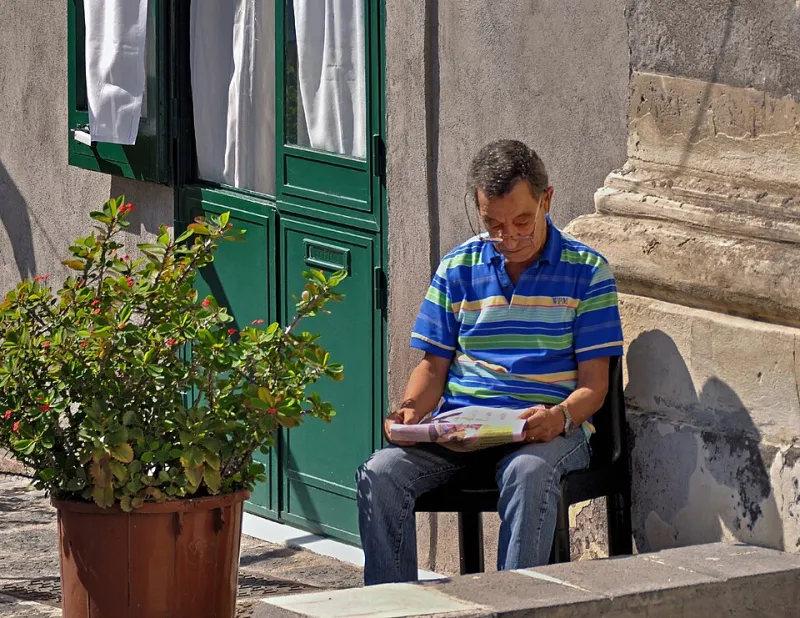
Photo: LulE79, CC BY-SA 4.0, via Wikimedia Commons
Sometime in the last couple of years, something shifted. The aspirational weekend — the one full of brunch reservations, curated outings, and content-worthy moments — started losing its grip. In its place, a quieter, stubbornly unglamorous alternative has been gaining serious cultural traction: the weekend where you stay home, cook something that takes too long, reorganize a closet, and call it a win.
And people aren't just doing this quietly anymore. They're posting about it.
TikTok and Instagram are full of videos celebrating what their creators openly call "boring" weekends. Slow mornings with bad lighting. Grocery hauls that aren't aesthetically arranged. Saturday afternoons spent doing laundry and watching something forgettable. The comments sections on these posts are flooded with people responding like they've been given permission to exhale.
So what exactly is going on here?
The Hustle Hangover Is Real
For a solid decade, American professional culture — especially among millennials and Gen Z — ran on a particular kind of mythology. The idea that your weekends should be an extension of your ambition. Side hustles, networking events, fitness challenges, travel content. Rest was something you scheduled around productivity, not the other way around.
The pandemic cracked that framework in ways that are still playing out. When the options for spectacular weekends evaporated overnight, a lot of people discovered something inconvenient: they actually didn't miss most of it that much. The elaborate plans had been filling a void that, once removed, turned out to be pretty comfortable.
"There's a clinical term for what a lot of young professionals have been experiencing — burnout — but I think what's happening culturally goes a layer deeper than that," says Dr. Priya Mehta, a therapist based in New York who works primarily with clients in their 20s and 30s. "People are questioning the premise. Not just 'I'm too tired to keep up this pace' but 'Why was I keeping up this pace in the first place?'"
That questioning has found a surprisingly comfortable home in the aesthetics of the ordinary weekend.
Staying In as a Status Symbol
Here's the genuinely interesting twist: the "boring" weekend hasn't just become acceptable. For a certain demographic, it's become aspirational in its own right.
There's a specific kind of social media post that captures this perfectly. Someone in their late 20s or early 30s, maybe a candle in the background, sharing a photo of a pot of homemade soup with the caption: this is my whole personality this weekend and I'm not sorry. The subtext is unmistakable. This isn't a consolation prize. This is a choice.
Lifestyle writer and cultural commentator Dana Osei, who covers burnout and work culture for several national outlets, has been tracking this shift for a while. "What we're seeing is a recalibration of what signals success," she says. "For a long time, being busy and having full weekends was a status marker — it meant you were in demand, you had a social life, you were doing things. Now, having the luxury of a completely unscheduled Saturday is starting to carry its own kind of prestige."
In other words: if you can afford — financially, professionally, socially — to simply not perform your weekend, that's its own form of flex.
Entertainment and Its Opposite
What's equally fascinating is how this shift has changed the relationship between entertainment and rest. Streaming platforms have spent years in an arms race to become the most unmissable thing on your screen. And yet, one of the defining features of the romanticized "boring" weekend is a deliberate ambivalence toward content.
People aren't binge-watching prestige TV as part of this trend. They're rewatching something comfortable they've already seen. Or putting on a movie they'll half-ignore while they cook. Or — and this is the detail that keeps coming up — not watching anything at all for a stretch of hours.
Entertainment avoidance, it turns out, has become its own cultural statement. The willingness to sit in a quiet apartment on a Saturday afternoon without filling every moment with input is being framed, especially among younger professionals, as a kind of discipline.
"My most-liked post in months was a photo of my kitchen window and a cup of tea with the caption 'no plans, no content, just this,'" says Tara, a 31-year-old graphic designer in Portland. "I posted it kind of as a joke and people responded like I'd said something profound. Which made me realize — yeah, I think I kind of had."
The Quiet Rebellion Framing
It's tempting to romanticize all of this too much — and some cultural critics have pushed back on the idea that staying home and posting about it is any kind of genuine resistance. Fair point. There's an irony in performing simplicity for an audience.
But that critique, while valid, might miss the more interesting thing happening underneath the surface. The shift toward valuing unglamorous weekends isn't really about the individual choices people are making on Saturday afternoons. It's about what those choices represent: a growing skepticism of the idea that your time off should justify itself through output, experience collection, or social visibility.
For a generation that grew up watching hustle culture get glamorized across every platform, choosing the slow weekend — even imperfectly, even while still posting about it — is a meaningful reorientation.
What We're Actually Craving
Dr. Mehta puts it simply: "What I hear from clients, over and over, is that they want weekends that feel like they actually belonged to them. Not a performance. Not a checklist. Just time that felt genuinely restorative."
That's not a radical idea. But in the context of how American culture has talked about free time for the past decade, it kind of is.
The boring weekend isn't really about boredom at all. It's about reclaiming something that got quietly outsourced to the algorithm, the group chat, and the calendar — the simple experience of a day that doesn't need to be anything other than what it is.
And if a pot of homemade soup and a pile of clean laundry is what that looks like? Honestly, same.